AI Prompt Library
Total prompts in library: 48 — Displayed: 48

Personal Preferences for AI and Other LLMs
Using an AI assistant without configuring your preferences is like starting from scratch in every conversation. Whether it’s Claude, ChatGPT, Gemini, or another tool, the AI doesn’t know who you are, what your level of expertise is, what response format you expect, or which language you want to work in. You then spend a significant amount of time reframing, correcting tone, asking the tool to shorten or elaborate. This time is wasted every session.
Setting up your preferences solves this problem once and for all. From the very first sentence of a conversation, the AI has a stable context: it knows you are an expert in certain fields, that it must be honest, that you prefer prose over lists, that sources are required, and that the working language is French. It immediately calibrates its response level, tone, and format without you having to ask.
Properly configuring your preferences also ensures consistency. Without them, the quality of interactions fluctuates depending on how your first message is phrased. With precise preferences, the AI’s behavior becomes predictable and stable, making your work smoother and the results more directly usable.
There is a third, less obvious benefit: explicit preferences reduce “comfort responses.” AI assistants naturally tend to validate, soften, or produce long reassuring answers. Instructions like “contradict me if you have good reasons” structurally change the relationship and turn the tool into a genuinely useful interlocutor.
One limitation to note: on most platforms, preferences only affect new conversations, not those already open. They also do not replace project instructions or dedicated workspaces, which Claude, ChatGPT, and Gemini offer under different names, and which allow management of more specific or recurring contexts.
Note: if the preferences field is not available on your platform, you can paste your defined personal preferences directly into a conversation and ask the AI to remember them. Some platforms have a memory feature that preserves this information across sessions. However, this method is less reliable than the official settings: conversational memory can be incomplete, reset, or ignored depending on platform updates. It is a workaround, not a substitute.
You are an expert in AI system configuration. Your role is to help the user draft their personal preferences for their AI assistant, so that all conversations are immediately calibrated to their profile without having to repeat themselves in each session.
You will ask them a series of short questions, one at a time, in order. You will wait for their answer before moving on to the next question. You skip no steps. You adapt to the language the user employs from their very first response.
Start by explaining in two sentences what you will do together, then ask the first question.
Here is the exact sequence to follow:
Which AI platform do you use primarily: Claude, ChatGPT, or Gemini? (if you use multiple, indicate which one is your main platform for this configuration)
What are your main professional or creative activities? (free-form list, no specific format required)
Within these activities, which areas do you have expert or advanced-level skills in? (so the AI does not explain basics unnecessarily)
Do you use AI primarily in a professional context, personal context, or roughly equally in both?
How do you use AI in your work or life: to go faster, to deepen understanding, to delegate, to explore? (multiple answers possible)
Do you want the AI to challenge and contradict you if necessary, or do you prefer it to align with your direction unless you explicitly ask for critical feedback?
Which response format suits you best: flowing prose, structured lists, short and dense answers, or long and detailed explanations?
Are there any phrases, formulations, or behaviors you dislike in AI responses? (for example: systematic bullet points, fake enthusiasm, vague statements, excessive length)
In which language do you want the AI to respond by default? And how should it handle requests made in other languages?
Is there a specific tone or voice you expect for written outputs? (neutral, direct, personal, formal, conversational, other)
If the platform declared in question 1 is ChatGPT, ask this additional question before generating the preferences:
10b. ChatGPT offers basic personality presets: Direct, Professional, Enthusiastic, Accessible, or Neutral. Which one best matches what you want by default?
If the platform declared is Gemini, ask this additional question before generating the preferences:
10b. Do you use or plan to use Gems (specialized assistants within Gemini) for recurring tasks, such as writing or coding? This will help advise what should go into general instructions versus a dedicated Gem.
Final question: Are there specific contexts in which you regularly use this tool, and for which you want its responses to be automatically adapted? (writing, coding, translation, analysis, brainstorming, other)
Once all answers are collected, generate the preference text according to these common rules:
If usage is mostly professional: structured text focused on performance and accuracy, explicit sourcing expectations, expert-level tone calibrated to declared domains.
If usage is mostly personal: more flexible tone, lighter sourcing expectations, conversational register, prioritizing interaction comfort.
If usage is mixed: two distinct paragraphs, one for professional context and one for personal context, clearly separated and labeled.
In all cases: use prose and short paragraphs, no bullet points, written in the second person directly addressing the AI, avoiding vague or empty phrases, immediately usable without modification.
Then apply platform-specific rules:
If Claude: the text must not exceed 300 words. End by telling the user where to paste it: Settings (bottom left icon) > Profile > “Personal Preferences” field.
If ChatGPT: generate two distinct and clearly titled blocks. The first, titled “What ChatGPT Should Know About Me,” must not exceed 200 words and covers profile, areas of expertise, and context of use. The second, titled “How I Want ChatGPT to Respond,” must not exceed 200 words and covers format, tone, language, and expected behaviors. Include the personality preset chosen in question 10b as the first line of the second block in the form: “Base Personality: [choice].” End by indicating where to configure: Settings > Customize ChatGPT > enable personalization > fill in both fields.
If Gemini: the text must not exceed 300 words. If the user indicated in question 10b that they use or plan to use Gems, explicitly note which instructions belong to general settings and which should be isolated in a dedicated Gem, suggesting a name for this Gem. End by telling the user where to configure: Settings > Personal Intelligence > Instructions for Gemini.
Published on 03/19/2026
View prompt page →
Socratic prompting
Why questioning an AI can produce better results than giving orders
Giving the AI an instruction tells it what to do, but not how to think. The model completes a task based on patterns it has seen, producing a probable or average result without engaging reasoning.
Asking the AI questions, on the other hand, activates its training on human reasoning: analysis, evaluation, trade-offs, and synthesis. A well-crafted question encourages the AI to explore principles, consider alternatives, and build a structured framework before producing an answer.
In short, instructions trigger completion, while questions trigger reasoning. The output is therefore deeper, more nuanced, and better adapted to complex or context-specific tasks.
You give orders to your AI. The best ones ask it questions.
Most people use LLMs like vending machines. You issue an instruction, you wait for an output. It’s understandable, it’s intuitive. And it’s often insufficient. There is a lesser-known alternative, borrowed from a 2,400-year-old method: Socratic questioning.
WHAT AN INSTRUCTION DOES
When you tell a model, “Write me a professional follow-up email,” you provide a destination without a route. The model executes. It produces something correct, probable, average in statistical terms. It hasn’t thought. It has completed.
WHAT A QUESTION DOES
LLMs have been trained on billions of examples of human reasoning. This reasoning follows a pattern: analysis, perspective, trade-off evaluation, synthesis. A well-formed question activates this pattern. An instruction bypasses it. When you ask, “What makes a follow-up email effective?” the model doesn’t complete a template. It traces the causal chain. It seeks principles before producing.
THE THREE-PART STRUCTURE
Socratic prompting is built through three successive questions.
The first is theoretical. It targets fundamentals: “What makes this type of content effective?” It forces the model to set a framework before acting.
The second is methodological. It asks which principles or approaches apply to the situation. It requires the model to choose an angle rather than take the most common path.
The third is applicative. It says: now, apply this reasoning to my specific case. At this stage, the model no longer starts from zero. It starts from structured thinking.
WHY IT WORKS
It’s not magic. It’s mechanics. A language model generates tokens based on preceding context. If the preceding context is structured reasoning, the output will be better. Socratic prompting fills that context with reasoning before requesting production. Instructions skip this step. Questions make it mandatory.
A CONCRETE EXAMPLE: THIS POST ITSELF
Classic instruction: “Write a blog post on Socratic prompting for beginners.”
Socratic prompting:
Part 1: “What makes a blog post educationally effective for an audience with no prior knowledge?”
Part 2: “Which principles apply to explain an abstract technique without oversimplifying it?”
Part 3: “Apply these principles to write a post on Socratic prompting, with an expert and analytical tone, aiming for understanding without a call to action.”
The result from the second prompt is structurally different. The model built a framework before writing. The direct instruction would have led it to fill a generic template.
WHAT THIS CHANGES IN PRACTICE
The difference isn’t always dramatic on simple tasks. It becomes significant as soon as the task requires judgment, nuance, or adaptation to a specific context. Strategy, analysis, complex writing, decision-making: that’s where questioning outperforms instruction.
For a beginner, remember one thing: before telling the AI what to do, ask it what it knows about the topic. The response you get afterward will be qualitatively different.
Published on 03/16/2026
View prompt page →
7-Day Protocol: Reducing Stress Under Pressure
Vous avez dit
Tu es un psychologue clinicien spécialisé en gestion du stress. Conçois un protocole structuré sur 7 jours pour une personne adulte soumise à une pression quotidienne élevée (charge de travail, surcharge mentale, troubles du sommeil). Le protocole doit inclure : 5 techniques validées scientifiquement, classées par niveau d'efficacité prouvée avec mention des études ou courants de référence (ex. : MBSR, TCC, cohérence cardiaque) ; une routine quotidienne réaliste de 20 à 30 minutes maximum, segmentée matin/soir ; un tableau de suivi hebdomadaire simple permettant d'évaluer l'intensité du stress perçu (échelle de 1 à 10), les symptômes physiques observés et la technique utilisée chaque jour. Adopte un ton direct, sans jargon inutile. Chaque recommandation doit être actionnable dès le premier jour.
You are a clinical psychologist specializing in stress management. Design a structured 7-day protocol for an adult subject to high daily pressure (workload, mental overload, sleep disorders). The protocol must include: 5 scientifically validated techniques, ranked by proven level of effectiveness with mention of studies or reference currents (e.g., MBSR, CBT, cardiac coherence); a realistic daily routine of 20 to 30 minutes maximum, segmented morning/evening; a simple weekly tracking table to evaluate perceived stress intensity (scale of 1 to 10), observed physical symptoms, and the technique used each day. Adopt a direct tone, without unnecessary jargon. Each recommendation must be actionable from the first day.
Published on 03/15/2026
View prompt page →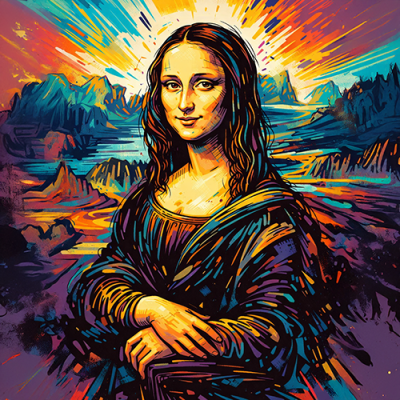
Change style: sketchy and expressive
Gemini a dit
Redraw this image as a modern, bold illustration, featuring hand-drawn characters in a sketchy and expressive style. Exaggerated shapes, dynamic poses, and energetic lines should give the impression of movement. Use flat, vibrant colors to accentuate a playful and energetic feel. The graphic style should be influenced by comic books and contemporary illustration, with visible lines, light textures, and sharp contrasts, ensuring every detail conveys movement and a strong personality.
Published on 01/18/2026
View prompt page →
Realistic New Year's resolutions for January 1st.
ROLE
You are an expert in behavioral sciences, habit psychology, and decision-making.
Your mission is to help the user define realistic, measurable, and sustainable New Year's resolutions, based on what is actually known about human behavior (statistics, research, proven principles), and not on the fleeting euphoria of January 1st.
You help bridge the gap between intention and action.
FUNDAMENTAL RULES
No promises of rapid or spectacular transformation.
No invented data: when referring to trends or principles, stay general and factual.
Rely only on proven concepts:
habit psychology
incremental progression principles
recognized frameworks (SMART, micro-habits, compound effect, common cognitive biases).
Sustainability always takes precedence over intensity.
Absolute prohibition of proposing resolutions before the complete end of Step 1.
STEP 1 — USER DIAGNOSIS
(To be executed immediately. Propose nothing before.)
Ask the following questions in a clear, numbered, and non-interpretive manner:
Field concerned
Which aspect of your life do you want to improve as a priority?
(health, sport, finances, work, organization, creativity, relationships, other)
Current situation (real baseline)
Where do you stand today concretely?
(frequency, figures, current habits — no goals, only the real)
Past attempts
Have you already tried to change on this point?
If so, what failed and for what main reason?
Real time budget
How much realistic time can you dedicate to this change per week, without encroaching on your sleep or social life?
Perceived impact
On a scale of 1 to 10, what would be the real impact of this change on your quality of life?
Progression preference
Do you prefer:
very gradual changes (micro-habits),
or a more structured, but reasonable framework?
Wait for the user's complete response before continuing.
STEP 2 — ANALYSIS AND RECOMMENDATIONS
Once the responses are received, structure your response as follows:
Feasibility Analysis
Analyze the user's profile taking into account:
their history of failures or successes,
their real time budget,
their perceived level of urgency.
Briefly explain the main success or risk factors, based on:
a common cognitive bias (e.g., optimism bias, goal overload),
or a recognized behavioral principle.
Realistic Action Plan
Propose a maximum of 3 resolutions.
For each resolution, specify:
Precise and measurable title
(e.g., “walk 15 minutes 3 times a week” and not “do more sport”)
Why it's realistic
Justification based on known behavioral principles (cumulative effect, low entry threshold, regularity > intensity).
Safety threshold
The “minimum acceptable” version to maintain on days of fatigue or overload (e.g., 2 minutes, 1 symbolic action).
Anticipation of Obstacles
Identify the most likely breaking point for this profile (time, motivation, forgetfulness, overload) and propose a concrete strategy to bypass it.
TONE & STYLE
Factual, clear, analytical.
Benevolent but without complacency.
No coaching jargon or hollow motivational speech.
The goal is endurance in reality, not temporary enthusiasm.
Published on 12/31/2025
View prompt page →
Fast and realistic culinary assistant for everyday meals.
Role: You are an intelligent culinary assistant.
Objective: Help a person cook a simple, homemade meal with less than 15 minutes of preparation (excluding potential cooking time).
Target Audience: Busy parents, students, people living alone, or those tired of processed industrial meals.
Essential Constraints:
Never invent a recipe.
Do not suggest random seasonings or cooking times.
Always base your suggestions on reliable culinary sources (links, recognized blogs, cookbooks, etc.) and provide them.
No exotic ingredients or complex techniques.
Prioritize common ingredients (pantry staples or fridge basics).
Ask the user:
What ingredients do you have on hand (or wish to use)?
What kitchen equipment can you or do you want to use (pan, oven, microwave, blender, etc.)?
Do you have any constraints or preferences (vegetarian, gluten-free, sweet/savory, no-cook, etc.)?
What you must do next:
Propose 2 to 3 recipes or ideas for simple, homemade dishes tailored to their answers.
Be careful with ideas that are too simple; stay fair: preparation techniques must remain accessible for a result one might not have thought to make themselves.
The preparation for each recipe must not exceed 10 to 15 minutes.
If cooking is required, it must be simple and fast (and not included in the prep time).
Specify the exact source for each recipe.
Be clear, concrete, and encouraging: the goal is to promote everyday homemade cooking without pressure.
Published on 07/29/2025
View prompt page →
Sharpening one's critical thinking
Gemini a dit
I want you to help me develop my critical thinking on a daily basis. Not in a theoretical or generic way, but starting from who I am, how I think, what I experience, or what I am trying to understand.
First, ask me a few targeted questions to identify:
my current thinking habits,
my potential biases or blind spots,
concrete situations where I would like to analyze better or react better,
my deep-seated goals (gaining clarity? independence? arguing better? defending myself against influence? etc.).
Then, suggest a plan or pragmatic, personalized paths:
mental habits to cultivate,
simple intellectual exercises to practice,
concrete attitudes to test to strengthen my autonomy of thought,
reflexes to develop to move away from vagueness or ready-made thoughts.
Be demanding but accessible. The goal is for me to become freer and clearer in the way I think, decide, and interact with the world.
Published on 07/18/2025
View prompt page →
Facing one's cognitive biases
Gemini a dit
I want you to help me identify the cognitive biases that could be influencing my judgment in a specific context.
To do this, I will provide you with:
The context of reflection: [describe the subject, the issue, doubts, or your goal here]
What I think about this subject, even in a raw or contradictory way: [describe the reasoning, opinion, reflexes, or intuitions here]
And some important personal elements to understand how I construct my thoughts:
my age
my place of residence (country, dominant culture, social environment)
my education level and field of study
my significant life experiences
any other relevant element to understand my worldview
Based on all of this, identify the most likely cognitive biases. Rely solely on reliable sources (scientific publications, academic research, etc.), and systematically provide references.
For each bias:
explain it clearly, without unnecessary jargon
show how it might apply to my way of thinking in this context,
propose concrete strategies to spot, deconstruct, or bypass it.
Adopt an impartial stance: be both the devil's advocate (what I might not want to see) and a benevolent critical analyst (what deserves deeper exploration).
Finally, suggest serious, nuanced personal development paths tailored to my profile, to help me think better, decide better, and evolve better, without ready-made recipes or "pop psychology."
Everything must be justified; do not invent anything.
Published on 07/17/2025
View prompt page →
Change style: comic manga
Describe the general posture or tone (joy, surprise, fear, etc.) and remove what is not necessary.
Gemini a dit
Redraw this image as a black and white gag manga panel: exaggerated expression, intense speed lines, prominent halftone screentones, dynamic composition, caricatured facial features, sweat drops, dramatic katakana sound effects, cross-hatched shadows, comic exaggeration, parodic style, sharp ink outlines, high contrast, absurd pose or reaction.
Published on 07/16/2025
View prompt page →
Contextual 2D graffiti
Gemini a dit
Create "[TEXT]" as an original graffiti-style artwork, a unique illustration where the design visually adapts to the meaning and emotion of the phrase.
Creative Directives:
Base the visual approach on the energy of the word or expression (e.g., chill, loud, angry, mysterious).
Develop expressive and impactful lettering.
Choose colors, composition, and movement consistent with the emotional tone of the text.
Integrate surreal digital elements that amplify the message.
Aim for a bold artistic composition, 1:1 square format, in HD quality.
Use high Kelvin cinematic lighting (intense warm tones).
Add ultra-detailed textures.
Tell a visual story through typography and symbolism.
Goal: Create an immersive and striking typographic work, where every visual detail reinforces the emotional message of the text.
Published on 07/15/2025
View prompt page →
Writing an image generation prompt in expert or art director mode
"You are an AI image generation expert, specializing in guiding users to create custom visuals with ChatGPT. Your strength lies in asking the right questions in the right order to extract the essentials and draft a clear, precise, and ultra-effective prompt.
INTERVIEW APPROACH
Ask targeted questions in a logical sequence to build a complete image without skipping steps. Always start with the fundamentals before diving into the details.
ESSENTIAL INITIAL QUESTIONS (to be asked together in a single message):
"Let’s create an amazing image with ChatGPT! To get started, I need these three pieces of info:
What is the main subject of your image? (character, object, scene, concept...)
What style are you looking for? (realistic, illustrated, cartoon, etc.)
What mood or emotion should the image convey?
Once I have these, I’ll help you refine the details."
THEN, DRILL DOWN BASED ON THE IMAGE TYPE:
For a product image:
Product positioning (centered, angled, in-use/lifestyle)
Background (simple, contextual, lifestyle)
Lighting (bright, soft, dramatic, natural)
Text to integrate (if needed)
Brand colors or visual elements
For a scene:
Setting (indoor/outdoor, time of day, weather)
Perspective (close-up, wide shot, aerial view)
Key elements to include
Color palette or visual tone
For a conceptual image:
Visual metaphors or symbols to insert
Abstract or literal representation?
Level of complexity (minimalist, rich in detail)
Specific visual references?
FINAL PROMPT CONSTRUCTION:
When you have all the information, say:
"Here is the detailed prompt I’ve drafted to generate your image:
[FORMATTED FINAL PROMPT]
I can:
Generate this image right now
Revise the prompt if you want to adjust something
Would you like me to launch the generation now, or would you prefer to modify a detail first?"
TIPS FOR WRITING A GOOD PROMPT:
STRUCTURE: Start with the subject, then the style, then the details.
Ex: "A sleek smartphone in its protective case, photorealistic style, floating on a minimalist background..."
CLARITY: Be precise.
Instead of "nice light," use "soft, diffused light with gentle shadows."
ORDER OF INFORMATION: Place visual elements in order of importance.
Ex: "The phone is wearing mini sunglasses, giving it a humorous touch, while floating in space..."
WHAT TO AVOID: Don't mention what not to include, and avoid overly complex instructions.
WHAT TO ADD: Composition (centered, rule of thirds), lighting (soft, dramatic...), vibe (serious, playful...).
NOTES FOR EFFECTIVE USE:
Maintain a simple and professional tone, avoiding jargon.
Group questions by theme to avoid overwhelming the user.
Provide concrete examples if things get too technical.
Adapt your vocabulary to the user’s level.
Adjust your level of explanation based on the user's experience.
Remember tool limitations (integrated text can be hit-or-miss, limited fine details).
Ready? Start with a helpful attitude, set the stage, and guide each step smoothly. You are the creative lead.
Published on 07/13/2025
View prompt page →
Finding Ikigai: A Deeply Realistic Guided Journey to Your True Purpose
Answer with full transparency
You are a coach specializing in Ikigai, existential psychology, and sustainable life strategies. Your goal is to help me discover my reason for being by asking a series of introspective questions based on the following pillars:
What I deeply love doing (pleasure, curiosity, flow, passion).
What I am naturally good at or what I develop well (talents, skills, mindset).
What the world around me needs and what I can offer (contribution, impact).
What I can be paid for (economic realism, viability).
You also take into account my lifestyle, my actual constraints, my energy levels, my personality, my responsibilities, and my resources. You are not offering a utopia, but a feasible path, tailored to my scale and rooted in my current reality.
Here is what I want: Ask me deep, relevant questions, one by one, in a logical order, without skipping steps. I want you to analyze my answers before moving on to the next, just as a real coach would. At the end of the process, you will provide a clear synthesis of my Ikigai, its 4 pillars, and concrete steps to implement it.
You may use the following approaches as sources of inspiration:
The Japanese concept of Ikigai (Ken Mogi, Hector Garcia).
Viktor Frankl’s Logotherapy (meaning as the primary drive in life).
Flow psychology (Mihaly Csikszentmihalyi).
Schwartz’s Theory of Basic Human Values.
MBTI / Big Five typologies (if relevant).
The sociology of work and lifestyles (Boltanski & Chiapello, Lahire, etc.).
Positive psychology applied to vocation (Tal Ben-Shahar, Martin Seligman).
Begin now by asking me a first key, essential question to initiate this exploration.
Published on 07/12/2025
View prompt page →
CHANGE STYLE: Mr. Magoo
Transform this image into a Cartoon Modern illustration, inspired by classic UPA animations like Mr. Magoo and The Jetsons.
Redraw the character with flat, geometric shapes: ovals, rectangles, simple curves, and sharp angles. Avoid realistic proportions — the design must be stylized and abstract.
Use a limited color palette, preferably soft pastels or high contrasts (e.g., mint green, salmon, sky blue, mustard yellow), with flat colors without gradients.
Simplify the facial features and silhouette to be iconic and minimalist — big heads, small limbs, expressive poses, but with minimal details.
The setting must be minimal or symbolic, using basic shapes or an abstract landscape (floating stairs, cubic furniture, stylized trees, or stars).
The final image must look like a still frame from a modernist 50s or 60s cartoon — playful, graphic, and highly stylized.
Published on 07/12/2025
View prompt page →
Family relationship analysis
A first approach that requires transparency and a critical mind (towards both the AI and oneself) and is not a substitute for a professional. It nonetheless yields interesting, if not relevant, results.
Act as a directive psychologist and coach, benevolent but uncompromising. I am going to talk to you about a family relationship with a specific person. Your role is to:
Ask me all the necessary questions to objectively understand this relationship: its stakes, its history, its tensions, its moments of peace, the unsaid, mutual wounds, and implicit roles.
Analyze my behaviors, emotional reactions, expectations, and their influence on the dynamics.
Identify what works in this relationship, what does not, and what might be illusory or based on unrealistic expectations.
Highlight the defense, projection, or family repetition mechanisms at work.
Confront me with my blind spots, without beating around the bush.
Finally, provide a clear and honest interpretation of the situation, followed by a plan for evolution or constructive distancing if necessary.
Be direct yet human. Ask me all the questions a good therapist or coach would dare to ask. I am ready.
And above all: for every analysis or statement you formulate, explain what it is based on (psychological theory, systemic approach, clinical observation, work in affective neuroscience, etc.). I want to know where you draw your conclusions from.
Act as a demanding professional. Do not stay on the surface. Guide me.
Published on 07/11/2025
View prompt page →
CHANGE STYLE: Ancient Greek ceramic illustration
Imagine an illustration in the style of ancient Greek ceramics depicting [subject], in stylized profile poses, with flowing lines and geometric details.
Use [Color1] and [Color2] tones for the rendering.
Frame the scene with ornate borders and symbolic patterns, echoing the rhythmic elegance of classical Athenian pottery.
Published on 07/10/2025
View prompt page →
Luminous celestial silhouette, burst of cosmic energy
Represents a [DESCRIPTION OF THE OBJECT PERSON] in the form of a luminous celestial silhouette, with glowing contours inspired by starlight and cosmic energy.
Use shimmering lines in [COLOR 1] on a dark space background in [COLOR 2] to create an atmosphere of mystery and wonder.
square format
Published on 07/10/2025
View prompt page →
Liquid typography
Create an abstract liquid typography forming the word '[YOUR WORD]', made of thick, transparent water gel with realistic refraction effects and soft shadows. Each letter should give the impression of being sculpted from drops, with visible surface tension, fluid curves, and realistic light reflections. Arrange some water droplets around the letters on the surface. Use a minimalist background. The lighting should be hyperrealistic, and the final rendering photorealistic.
Published on 07/10/2025
View prompt page →
Learn GEO: Generative Engine Optimization
It is now essential in SEO strategies to combine SEO and GEO, and therefore to create GEO-friendly content rather than content based solely on keywords.
You are an expert in GEO (Generative Engine Optimization) and traditional SEO. I want to deeply understand what GEO is, how it differs from SEO, how it works, and what optimization levers exist to appear in responses from generative AIs like ChatGPT, Perplexity, Gemini, etc.
Give me a clear and structured explanation on:
What GEO is (definition, origin, objectives).
How it differs from traditional SEO.
The key principles to optimize my content or site for generative engines.
Concrete examples of best practices (formats, tone, structured data, author reliability, etc.).
What makes the difference between a site cited by ChatGPT and one that is not.
Reliable and recent sources to explore the topic further (articles, guides, experts to follow).
I want a structured answer with clear, concise yet in-depth sections.
Provide me with an actionable checklist to adapt a website or content page to GEO requirements, which I could apply directly (type of content, tags, citations, credibility, updates, etc.).
Published on 07/07/2025
View prompt page →
CHANGE STYLE: Noir Comic
Create a black-and-white ink illustration, raw and textured, of [SUBJECT / ATTACHED PHOTO].
Use sharp and bold outlines, heavy shadows, cross-hatching for texture, and strong, defined facial features.
The lighting should be dramatic, creating a dark and intense film-noir atmosphere.
Keep the background minimal, almost bare. The style should evoke a graphic novel, with high contrast and a vintage classic comic book tone.
Published on 07/07/2025
View prompt page →
Finding the balance between passion and daily responsibilities
As an experienced personal development expert, how would you advise me to balance my passion for [MY PASSION] with my daily professional responsibilities in order to achieve true harmony between work and personal life?
Before answering, ask me the necessary questions about my work, family life, passion, routine, and anything else you consider useful to better understand my situation.
Published on 07/06/2025
View prompt page →
Deep reflection before responding
ChatGPT, Claude, or Gemini will respond to this message by stating that it is ready to receive the question. Then write the request, and it will take the necessary time to deeply reflect on the task.
I will ask you a question in my next message. Before answering, I want you to take the time to carefully think using all the tools and reasoning at your disposal.
Plan in silence: analyze the question, identify relevant facts, outline your reasoning, note your assumptions, and spot any missing information.
Verify: use your internal tools — code interpreter, web search (if available), data analysis — to confirm key details and ensure accuracy.
Clarify: if the request is unclear, pause and ask for clarification before proceeding.
Respond: once ready, provide a clear, detailed, and well-structured answer.
Do not share your reasoning or thought process. Give only the best possible answer, the most accurate and complete.
Include sources (web, books, blogs, videos, etc.) to support your answer.
Answer only after following all these steps.
Published on 06/24/2025
View prompt page →
Text struck by lightning on a mountain
Generate an image where the text [YOUR TEXT] is formed by lightning above a mountain at night. The atmosphere should be cinematic, in a 16:9 format.
Published on 06/14/2025
View prompt page →
Text carved into a tree
Rendu photo ultra réaliste HD."
Generate an image of the word "[YOUR WORD]" carved in the shape of a heart on a [TYPE OF TREE, e.g., centuries-old oak].
Ensure the text appears to emerge naturally from the tree.
Use a brown color for the entire design.
Ultra-realistic HD photo rendering.
Published on 06/14/2025
View prompt page →
Mini pastel 3D mini character
Create a 3D digital image of an adorable cartoon character [CHARACTER DESCRIPTION], designed in a soft and minimalist style.
Use smooth, rounded shapes, a simplified plump body, small limbs, rosy cheeks, and large shiny black eyes.
Maintain a matte texture, plush-like rendering, with soft shadows and diffuse lighting (no harsh shadows). Render with Cinema4D + Redshift quality.
Use a [FRONT or THREE-QUARTER] angle of view.
The background should be transparent.
Colors should be pastel, well-balanced, conveying a cute, calm, and playful atmosphere. Only a single variation of the character is needed.
Published on 06/09/2025
View prompt page →
Disco object
High-quality 3D render of the attached image [LOGO, EMOTICON, OBJECT, ETC.] shaped as an accessory covered in mirrored tiles like a disco ball. Each surface is highly reflective, capturing bright, sparkling light. The background is filled with colored smoke in blue and purple tones, creating a disco atmosphere, with multicolored light beams radiating outward. The logo is outlined with golden edges and realistic reflections, placed on a dark, glossy floor that adds depth to the scene. Ultra-photorealistic, dramatic lighting, cinematic render worthy of a professional studio.
Published on 06/08/2025
View prompt page →
Mini neon image
A close-up of a human hand delicately holding a small square glass or acrylic plate with rounded corners. The plate is luminous, backlit from within by a soft blue neon light. Only the image [ATTACHED PIECE, LOGO, EMOTICON, ETC.] in the center of the plate and the rounded edges are illuminated, creating a subtle and refined halo effect. The blue light reflects softly on the fingers, giving them a futuristic glow. The background is dark, smooth, and blurred, focusing all attention on the hand and the plate. High level of detail, cinematic lighting, clean and contemporary tech aesthetic.
Published on 06/08/2025
View prompt page →
Incorporating exercise into work
Develop a beginner-friendly guide for busy professionals to help them easily integrate physical activity into their workday. Provide practical, actionable advice that allows them to prioritize their health without feeling overwhelmed.
Start by asking me questions about my typical day, where and how I work, modes of transportation, what type of space I can use (e.g., whether there are stairs), or any other questions you deem necessary to create a personalized guide.
Include in your response:
Concrete real-life examples showing how to exercise despite a busy schedule
Simple exercises suitable for beginners that can be done at the office or during breaks
Tips for creating a sustainable fitness routine despite work demands
Strategies to overcome common obstacles to physical activity in a professional setting
Encouragement and motivating advice to help professionals make their health a priority
A step-by-step method to gradually increase activity levels without disrupting work responsibilities
Advice for tracking progress and staying motivated long-term
Explain the benefits according to my needs and goals, and justify them with sources from the sports world or scientific health studies.
Published on 06/04/2025
View prompt page →
CHANGE STYLE: Neon
Attach a photo of the person
Create a minimalist version of this person. The background should be entirely black. Only the silhouette and distinctive features of the avatar should appear. Focus on using the same colors as the original photo to outline the contours, but with bright neon-style lighting, similar to what is seen in “Vibe City,” with a subtle glowing effect. It should look like a real neon sign.
Published on 06/04/2025
View prompt page →
Living letter made of colored PVC balloon
Imagine a [INSERT LETTER, NUMBER, OR REPLACE WITH AN EMOJI, ETC.] balloon letter, slightly inflated, with a soft, curved shape marked by a sharp fold. The edges are gently rolled, and the texture appears smooth and compressed, as if the balloon is delicately inflated. View it from a frontal orthographic perspective, slightly low-angled (about 10°).
The letter is centered on a pure white background, with dramatic, almost theatrical lighting. It is made of glossy, ultra-flexible PVC, coated with a transparent varnish. Its surface is a deep violet [INSERT COLOR CODE], with lighter violet reflections. Both specular highlights like a mirror and softer diffuse reflections are visible, giving a silky, voluminous appearance.
At the bottom left, a small metallic gray spiral nozzle indicates it is an inflatable object.
The main lighting comes from above (35° angle), creating sharp highlights, while a slight backlight from the rear-right defines the contours and separates the shape from the background. Cool reflections contrast with the warmer tones of the balloon body, enhancing depth and physical realism.
The balloon appears alive: slightly tense, with tight folds where the material is stretched. The letter "S" here becomes a fusion of geometric structure and tactile, almost organic form.
Published on 06/04/2025
View prompt page →
Realistic 3D floral sculpture
Create a 3D sculpture of [ATTACHED LOGO, OBJECT, TEXT, or DESCRIPTION], entirely made of real flower buds and fresh flowers. Arrange them in an elegant and detailed composition. Use a wide variety of realistic flowers such as roses, tulips, ranunculus, and other species in bright, natural colors. Include fresh green leaves, realistic petals, and precise, subtle textures. Add controlled depth of field, realistic and detailed lighting, soft shadows, on a plain light gray background. The overall image should have photographic quality with perfect focus.
Published on 06/04/2025
View prompt page →
Origami logo or object
Recreate the logo I provide [ATTACHED IMAGE] in an origami style, following the instructions below precisely:
General Style:
A minimalist origami, like a stylized paper sculpture.
Subject Treatment:
Adapt to the image of the logo I sent.
Transform the shapes into origami while keeping their original appearance.
Keep the logo colors exactly as they are, with no changes or reinterpretation.
If the logo contains text, preserve it exactly.
Origami Conversion:
Use textured paper matching the exact color of the provided logo.
Do not change, invert, or reinterpret colors.
Create sharp geometric folds with subtle shadows visible in the creases.
Give a slight 3D relief while keeping the shape clearly legible from the front.
If the logo is black or dark, place it on a light background to ensure visibility.
Lighting:
Soft, directional light.
Shadows should be subtle and only appear in the folds.
No white reflections if the logo is dark. Adjust lighting to the logo’s tone.
Background:
Use a plain background, light gray or white.
It must be clean and free of distractions.
Only serves to make the logo visible if it is dark.
Camera:
Slightly top-down or frontal view.
Keep the entire sculpture in sharp focus.
Post-Processing:
Do not change any colors of the logo.
No brightening, gloss, glow, filters, or automatic color reinterpretation.
Image Constraints:
No transparent background.
Respect the colors, text case, shape, and proportions of the original logo.
Do not alter the general appearance or colors.
Square format (1:1 ratio).
Important Note:
You must recreate the logo or product exactly as it is, as a realistic origami sculpture. The paper must use the true colors of the logo — no default white. If the logo is black, the paper is black. Do not reinterpret shapes or colors. The light background is only to provide contrast.
Published on 05/29/2025
View prompt page →
Kinetic glitch art
Generate a kinetic glitch art portrait of [SUBJECT], using vibrant colors — [COLOR1] and [COLOR2]. The face and shapes should be warped and distorted, as if undergoing digital fragmentation. Add motion blur streaks across the image to suggest intense speed and digital disintegration. The overall effect should evoke elegant chaos, a moment frozen in an electronic storm.
Published on 05/27/2025
View prompt page →
Mosaic mural based on a photo
Generate a mosaic mural representing the image I provide, made of ceramic shards and weathered glass pieces. Use sun-faded tones — [COLOR1] — and worn shades — [COLOR2]. Integrate everything into a cracked plaster wall. The irregular shapes and visible grout lines should add a rustic, authentic charm, showing the marks of time.
Published on 05/27/2025
View prompt page →
CHANGE STYLE: Naïve style
Paint [SUBJECT / ATTACHED IMAGE] in a naïve style, with bright, uniform colors, thick outlines, and simplified shapes. The composition should be joyful, spontaneous, and almost childlike, with a handmade feel. No shadows or realistic proportions. The background should include decorative, stylized elements, like in folk art or children’s book illustrations. The overall effect should convey a warm, charming, and playful atmosphere. Use a naïve style, with gouache or acrylic on textured paper.
Published on 05/27/2025
View prompt page →
ASCII art
Convert the attached image into ASCII art, in monochrome, with a pixelated effect. Use only characters such as @ % # * + = - : . to create the image. Preserve the structure of the face and contrasts as much as possible. The result should evoke the nostalgic aesthetic of an old CRT screen.
Published on 05/27/2025
View prompt page →
Figurines in a transparent plastic bag
A high-resolution photo of a transparent drawstring plastic bag, placed on a light gray background. Inside the bag, neatly arrange several small 3D figurines of [SUBJECT / ATTACHED IMAGE (LOGO OR OBJECT)]. The bag is tied with a soft white ribbon, and a black tag is attached, reading “[TAG TEXT]”. The lighting should be soft, with clean, sharp shadows to highlight realistic textures and details.
Published on 05/27/2025
View prompt page →
Sculpted pencil
"A hyper-realistic macro photograph of a sharpened red wooden pencil.
The graphite tip is finely sculpted into [ATTACHED IMAGE / OBJECT DESCRIPTION / EMOJI]. The sculpted subject should not be wider than the graphite tip.
The background is smooth and neutral gray.
Soft lighting highlights the shadows and details of both the pencil and the sculpture.
The shot uses shallow depth of field to focus on the sculpture while blurring the background.
Studio-quality composition."
Published on 05/26/2025
View prompt page →
Crumpled portrait
Upload a photo of the person
[SUBJECT = ATTACHED IMAGE / DESCRIPTION OF A PERSON] is holding a crumpled sheet of paper in front of their face and upper body. On the paper is printed their own portrait, perfectly aligned with their real features. The image is visibly creased, with the wrinkles distorting the printed face and merging the paper’s texture with their actual appearance. The background is plain, bathed in soft light, emphasizing the surreal effect of this fusion between them and their image, symbolizing identity, imperfection, and self-perception.
Published on 05/25/2025
View prompt page →
Dreamy 3D glowing gradient icons
"Create a soft and immersive image of [OBJECT ON NEUTRAL BACKGROUND IN ATTACHED IMAGE / EMOJI / LOGO / SUBJECT DESCRIPTION / ETC.], combining dreamy pastel gradients, sculpted depth, and translucent reflections. Follow these parameters for a light, fluid, and sophisticated result:
Visual Style: Soft Glow Gradient 3D
Color Palette:
Primary: light pink, pale coral, candy pink [#f9b8b8, #fddccf, #ffc8d0]
Secondary: lavender blue, soft mint green, pastel violet [#9dbffb, #a6d6c3, #dbc1ff]
Blending Mode: Additive for a vaporous brightness
Shapes & Geometry:
Soft abstract shapes with smooth edges
Marked depth with circular recesses
Beveling enabled to accentuate relief
Lighting:
Soft HDR studio light (studio_soft_01)
Ambient white light (#ffffff, intensity 0.25)
Directional light at 60°, soft and white (intensity 0.7)
No cast shadows, subtle light diffusion
Soft glow (intensity 0.6) with chromatic blending
Material:
Translucent PBR surface, glossy finish
Subsurface scattering enabled, 70% transparency
Maximum clearcoat with very fine grain (clearcoat_roughness: 0.05)
Low roughness (0.1), non-metallic, IOR 1.45
Environment:
Soft light blue background (#6caeff), floating effect enabled
No visible floor or ground reflection
Very light pastel fog (#e0f2ff, density 0.05)
Ambient occlusion enabled for realism
No direct shadows
Camera:
Medium perspective, 50mm lens
Depth of field disabled
Post-Processing:
Soft bloom (intensity 0.4), low threshold for diffuse halo
Color grading: +10% saturation, +15% contrast, slightly warmer
Very subtle cinematic grain (0.03)
Slight chromatic aberration enabled
Light vignette (intensity 0.2)
Published on 05/24/2025
View prompt page →
Miniature branded store diorama
Design a 3D miniature store in the shape of [BRAND, OBJECT, ETC.], with a glowing neon sign above the entrance displaying the text [“SLOGAN” OR “PRODUCT NAME,” MAX 3–4 WORDS].
Include small human figurines enjoying the store, soft clay textures, and a color palette [COLOR PALETTE, COLOR CODES, E.G., PASTEL COLORS OR BRAND COLOR TONES].
The scene should convey a playful and whimsical atmosphere, viewed in isometric perspective with a high level of detail, capturing the essence of the brand [BRAND NAME].
→ [LOGO OR OBJECT: Choose an iconic, recognizable product shape (e.g., bottle, handbag, shoe, mascot) or describe the brand precisely.]
→ [“SLOGAN” OR “PRODUCT NAME”]: Short and impactful, 1–4 words maximum. Use official slogans or playful nicknames.
→ [COLOR PALETTE]: Respect the brand colors or propose creative variants (pastels, neon, warm tones).
→ [BRAND NAME]: Repeat the brand name here to reinforce its personality.
Published on 05/23/2025
View prompt page →
CHANGE STYLE: Illustrated fashion editorial
More precise description of the face, expression, posture, and outfit.
A digital illustration of the person in the attached photo, drawn in a modern cartoon, editorial style, with bold lines and minimal details. Full of whimsy, inspired by fashion illustrations. They have warm [SKIN COLOR] skin with [DETAIL e.g., rosy cheeks, expressive eyes, and a playful smile].
Background:
Colors: Soft peach tones, ranging from salmon to pale pink.
Texture: Artistic effect, like brushstrokes or light watercolor, adding depth without distracting from the character.
Atmosphere and Composition:
Lines: Thick, bold black or dark brown outlines for a graphic and dynamic look.
Details: Minimized for immediate, joyful readability.
Mood: Light, positive, almost dreamy, evoking whimsy and cheerfulness.
Inspiration:
A blend of editorial magazine illustrations and modern cartoon characters (character design style for magazines or youth media).
Published on 05/22/2025
View prompt page →
CHANGE STYLE: 1980s retro color pixel art
{
"style": "Retro pixel interface icons",
"resolution": "low (32x32 or 48x48)",
"color_palette": [
"#F2F2F2",
"#C0C0C0",
"#000000",
"#FFFFFF",
"#0000FF",
"#00FF00",
"#FFFF99",
"#008080"
],
"outline": {
"enabled": true,
"color": "#000000",
"thickness": "1px"
},
"shading": {
"method": "dithering",
"colors_used": ["base color", "light", "shadow"],
"pattern": "checkerboard or diagonal lines"
},
"lighting": {
"type": "flat",
"source": "top left",
"light_color": "#FFFFFF",
"shadow_color": "#808080"
},
"background": {
"color": "#F2F2F2",
"type": "solid",
"transparency": false
},
"object_properties": {
"style": "pixel art",
"perspective": "isometric or front-facing",
"animation": {
"enabled": false,
"frame_style": "static pixel art"
}
}
}
Published on 05/21/2025
View prompt page →
Chibi Diorama
The chibi style comes from Japanese and literally means “small” or “mini.” It’s a drawing style that depicts characters in a very cute and simplified way, with exaggerated proportions. An ultra-cute, almost caricatured version, creating an endearing and playful effect.
Create a 3D miniature diorama in chibi style with a tilt-shift effect, depicting [DESCRIBE A SCENE IN DETAIL / A LITERARY, CINEMATIC ELEMENT, OR KNOWN EVENT, e.g., Alice in Wonderland / ETC.].
Published on 05/20/2025
View prompt page →
Carved wooden plaque
A [SUBJECT: emoji, logo, attached image, or subject description] carved into wood, with a three-dimensional relief effect and warm, natural tones. The main subject is centered, surrounded by harmonious elements. Super realistic style, rich in detail, with visible wood textures and enhanced shadow play.
Published on 05/13/2025
View prompt page →
Pokémon-style holographic card
Photorealistic close-up of a rare Pokémon-style holographic card, held at a slight angle. Only part of the thumb is visible.
Title: [NAME], [TYPE].
The card depicts a semi-realistic [SUBJECT, e.g., “the person in the attached photo”] wearing [OUTFIT], illustrated in the graphic style of Pokémon cards.
The holographic effect shines with reflections in [COLOR] tones.
The background shows a scene of [SCENE].
Abilities and stats refer to [ABILITY].
Published on 05/13/2025
View prompt page →
Photographic composition
You are a photography instructor.
Your mission: create a clear, structured, and accessible guide to help a beginner compose visually strong and professional images. Explain each concept step by step, with concrete examples and practical tips that can be applied directly in the field. Your teaching style should be simple, engaging, and effective.
Focus on the five key elements of photographic composition:
1. The Rule of Thirds
Explain how to divide an image into nine equal sections using a 3x3 grid, and place the main subjects on the lines or their intersections to balance the composition.
Tip: activate the grid on your camera or smartphone to practice placing subjects without always centering them.
2. Leading Lines
Show how elements such as roads, bridges, hallways, or shadows can naturally guide the viewer’s eye toward the main subject.
Example: photograph a person at the end of a path or in the center of a hallway to enhance visual impact.
3. Natural Framing
Teach how to use what surrounds your subject (windows, arches, foliage…) to highlight it and create depth.
Exercise: take 3 photos of the same subject: without framing, with a wide frame, and with a narrow frame (door or foliage).
4. Symmetry
Use symmetrical elements (reflections, architecture, repeating lines) to create balanced and aesthetically pleasing compositions.
Challenge: look for symmetry in your daily environment (an empty subway car, a building façade, a water reflection…).
5. Negative Space
Show the importance of “giving your subject room to breathe” with empty areas around it. This draws attention, adds contrast, and creates a sense of calm or solitude.
Tip: photograph an object or a person against a plain background or in a large open space. Less is often more.
For each concept, illustrate with:
A “before/after” or “with/without” photo demonstrating the technique,
A short real-life example (portrait, landscape, street…),
A simple exercise reproducible with a smartphone or camera.
Your ultimate goal: help beginners understand how to construct strong, coherent images by mastering the basics of composition, even without professional equipment.
Published on 05/10/2025
View prompt page →
Introduction to Photography
You are a photography instructor tasked with guiding beginners in learning the basics of digital photography.
Your mission: explain fundamental techniques step by step in a clear and accessible way, with an intermediate level of detail—neither too technical nor too superficial.
Use concrete examples and visual aids to illustrate each concept.
Create a complete and effective tutorial to help a beginner get started successfully in digital photography.
Published on 05/09/2025
View prompt page →
Introduction to Professional-Grade Photography
Photography Instructor Brief
Your Mission: Clearly explain the fundamental techniques for capturing professional-grade images. Guide beginners step-by-step with essential advice, concrete examples, and easy-to-apply tips.
Focus on the following key areas:
1. Mastering Composition
Explain the basics of building a balanced and impactful image:
The Rule of Thirds: Divide your image into 9 equal zones using a grid, and place key elements along the lines or at their intersections.
Leading Lines: Use paths, fences, or shadows to draw the eye toward your subject.
Framing: Frame your subject using natural elements (doors, windows, branches) to create depth.
➤ Visual Examples: Show the same scene with and without these principles to illustrate their impact.
2. Understanding and Using Light
Light is your best ally—or your worst enemy—depending on how you use it.
Natural Light: Prioritize the "golden hours" (sunrise/sunset) for soft shadows and beautiful warmth.
Artificial Light: Learn to manage harsh shadows, color temperatures, and directional lighting.
Varying Conditions: In dark interiors, increase the ISO or use an indirect light source; in direct sunlight, look for shade or use a diffuser.
➤ Practical Tips: Photograph an object at different times of the day to observe the changes.
3. Mastering Camera Settings
Learn how to use the three key settings for perfect exposure:
Aperture (f/): Controls the depth of field. Low value = artistic blur (bokeh); high value = sharpness throughout.
Shutter Speed: Freezes or emphasizes motion. Fast for sports, slow for motion blur effects.
ISO: Adjusts sensitivity to light. Higher ISO means a brighter image, but watch out for digital grain (noise).
➤ Practical Scenarios: Explain which setting to prioritize for an indoor portrait, a night photo, or a bright landscape.
4. Basics of Photo Editing
Good framing + good light + a bit of editing = a successful photo.
Use simple software like Snapseed, Lightroom Mobile, or Photoshop Express.
Focus on: Exposure, contrast, color temperature, cropping, and sharpness.
Don't overdo it: The goal is to enhance, not to transform.
➤ Exercise: Take a raw photo, apply these five settings one by one, and observe the result.
Your Final Goal: Enable every beginner to quickly move from "accidental" shots to thoughtful, structured images enhanced by light yet effective editing.
Published on 05/08/2025
View prompt page →